How Our Food Pantry Helps Families Thrive
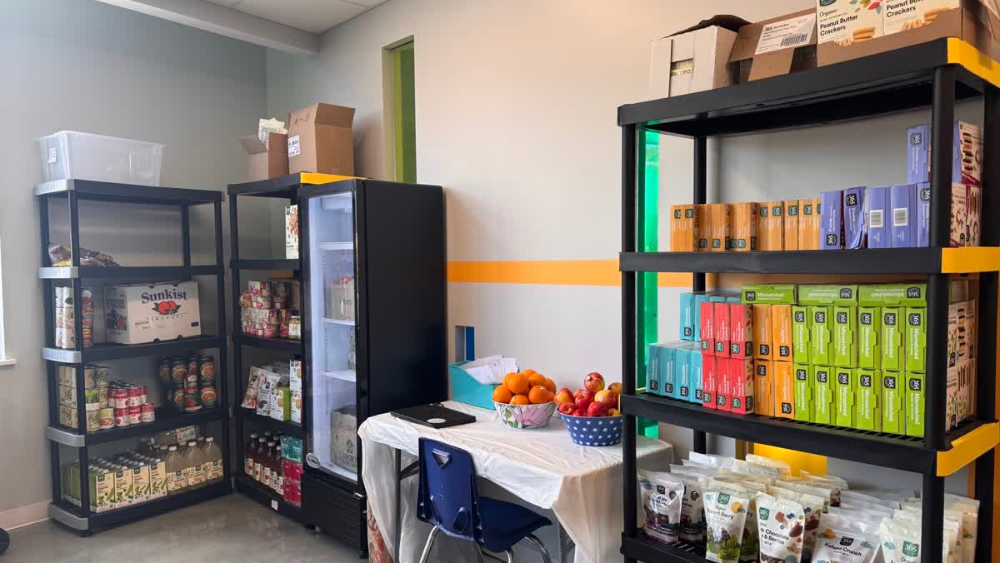
In the fall of 2025, Aspire launched a food pantry, a pilot program to be there for families during economic hardships, in response to their feedback and their needs. We did not know how many families would need assistance with obtaining food and the financial struggles endured surrounding food availability, but we were prepared to help.
Food insecurity is not just central to the household, it shows up in the classroom. Paula Fynboh, Aspire’s CEO, has said that, “Education is holistic and relational. A student can’t show up and learn in isolation from what is happening around them. Students cannot focus properly and learn with empty bellies.” Aspire knows that the negative health impacts of food insecurity among our students directly affects their education by shortening attention spans and decreasing the likelihood of retaining learned information. It has become increasingly clear that the education crisis among students in America, including Aspire students, is is not a failure of individual students or families, it is the result of inequitable systems that shape whether a child has the stability and support to learn in the first place. This is not just due to challenges in the education system or the emergence of AI, it is a combination of interconnected, systemic inequities, including access to food, housing, and economic opportunity that determines a child’s ability to show up ready to learn.
Last year, we heard from many families that increased grocery prices and cost of living were making their financial situations more challenging. From July 2024 to June 2025, food prices rose 2.6%, with some prices of meats, poultry, fish, and eggs up to 7.3% (Arlington County, 2025). Yet, many families have been feeling the effects of raising prices for many years, and ultimately, facing food insecurity within their household:
- In 2021, roughly 300 children faced food insecurity in Arlington County (Feeding America, 2026).
- 100% were considered eligible for federal nutrition programs
- In 2024, food insecurity in Arlington County increased to 5,220 children affected (Feeding America, 2026).
- Slightly under half (47%) of households with food insecure children are likely eligible for federal nutrition programs, leaving no means of food support for 53% of those facing food insecurity.
Our community partnerships with Capital Area Food Bank and Kitchen of Purpose has allowed us to provide afterschool meals to students at all three of our sites. While we are extremely grateful for this opportunity to support students, for some families it is not enough. Given 97% of our students qualify for free or reduced lunch from their school, there becomes an increased need for a steady supply of food when they’re not in school during weekends, seasonal breaks, and holidays. This reaffirmed the growing need for creating a program to tackle this issue.
In the first eight months of our food pantry alone, we had 343 visits – breaking down to about 156 individuals and households. One family expressed their gratitude to Aspire’s food pantry because “this food is not only Thanksgiving food, it is a food for a week because I don’t have a job and I need to feed my three kids, thank you Aspire.” Our food pantry being located at Aspire’s Arlington Mill site allows for reduced transportation barriers for families who do not have a reliable means of transportation. When families come to pick up their students they can quickly and easily pick up food from the food pantry without needing to make additional stops. Our food pantry is not just about having the potential to be a reliable safety net for our families, it is about how we can make aspects of their lives more convenient when and if they are struggling.
“Receiving the food items during summer camp was such a great help to our family. I’m truly grateful for the support, it made a difference for us and allowed my child to enjoy camp without us having to worry as much about having enough food. It meant so much to know that our community was there to help.”
— Nancy, Randolph Parent
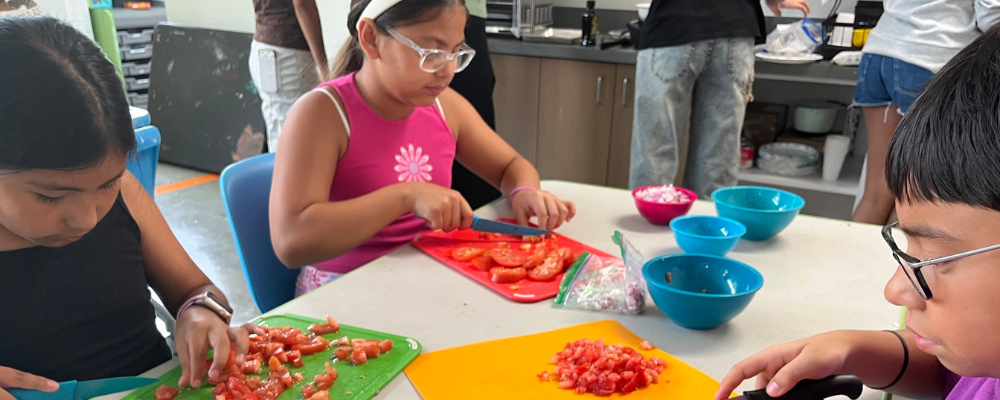
It was essential that Aspire built its food pantry around the populations we serve. Claudia Ramirez Cuéllar, Aspire’s Parent and Community Outreach Coordinator and parent of a former Aspire student, has allowed us to deepen the programming that we offer to families by continuing to bridge the gap of communication. With Claudia’s transition into a full-time, permanent staff position in 2025, she has been able to build a trusting relationship with our families through group and 1:1 meetings – a gateway into creating deeper support for our families, connecting them with resources, and listening to what parents really need. Through these conversations, we began by stocking our food pantry with culturally significant food staples that reflect the traditions and tastes of our families, so that support feels like dignity and partnership, and food that families can incorporate into the meals they already serve at home, meeting them where they are. This inspired Aspire to coordinate more cooking lessons into our parent and student programming to provide families with an opportunity to cook healthy meals and snacks together. Last year we hosted 12 parent nutrition workshops and parent/child cooking classes, reaching 37 parents and 44 children. One mother shared that before attending a cooking class, her two children and their father had little opportunity to do activities together. Now, they cook together at home every week and express gratitude to the cooking class for bringing them together in this way.
All programming at Aspire begins the same way: by centering and listening to Aspire students and families as partners. Whether we were evolving our programs to meet families’ needs during COVID, building a new logic and literacy curriculum to keep pace with the changing educational landscape, creating a Makerspace to open the door to hands-on learning, or now, opening our food pantry, every decision starts with what we heard directly from our community. Despite funding cuts, we prioritized deepening our programming, based on parent and student feedback, to make Aspire a place that families can trust and feel safe. Our food pantry is more than just supplying families with food. It’s about a support system, a community ready to help, and a strong belief that:
“Everyone should have the ability to have consistent access to enough nutritious food to live healthy and active lives. Leading our food pantry gives me the opportunity to help families meet that basic need and feel supported during times when food may be difficult to afford. For me, this work is about more than providing groceries; it’s about helping create stability, dignity, and a stronger sense of community. When we come together to make sure our neighbors have access to the food they need, we are taking an important step toward building a healthier, equitable, and more food-secure community.”
— Maria A Martinez, Program Instructor